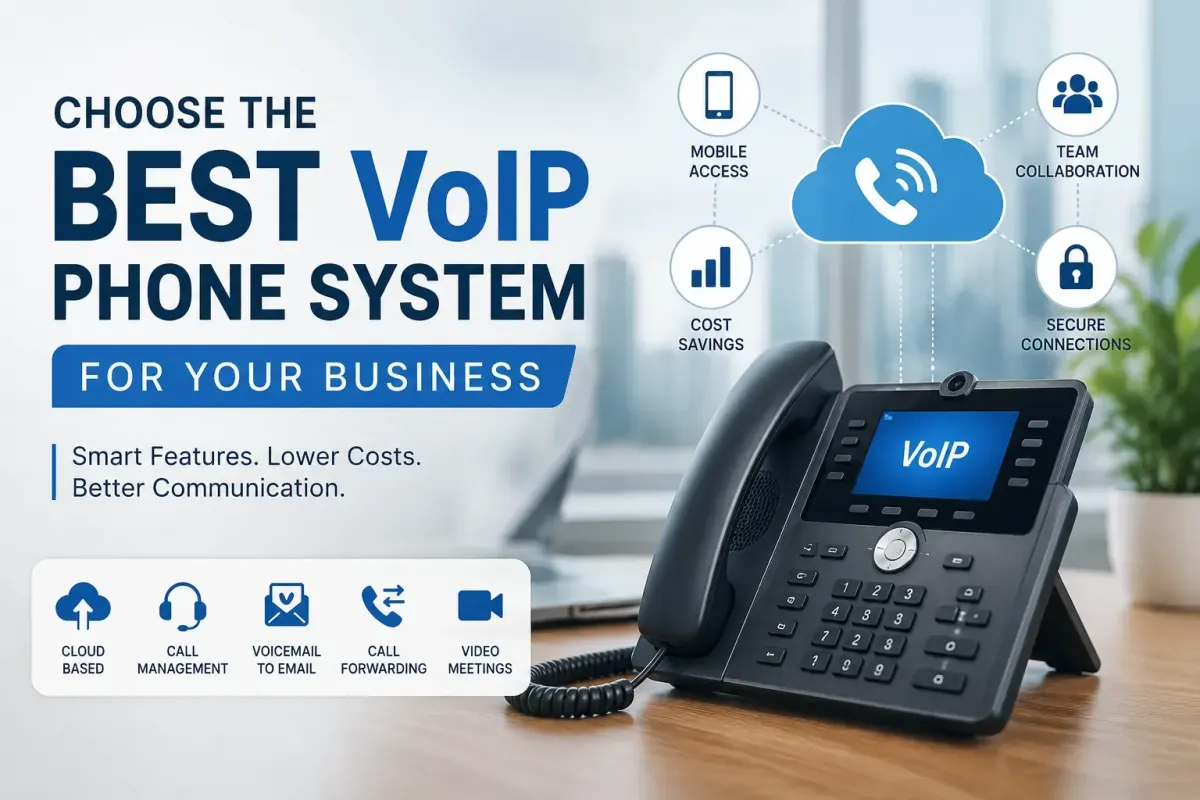
Choose the Best VoIP Phone System for Your Business
The phone rings. A customer wants a quote. Another customer needs support. A new lead wants information. An employee says they missed a call. Someone asks who spoke to the customer. Nobody knows.
This is usually where many businesses realize that their old phone setup is no longer working. The business has grown. The calls have increased. Employees work from different places.
Customers expect quick answers. And suddenly, one phone sitting on one desk is not enough anymore. That is exactly why more businesses are moving to a VoIP Phone System for Small Business.
The idea sounds simple. Use the internet for calls instead of old phone lines. But when business owners start searching, things become confusing very quickly. One company talks about hundreds of features.
Another promises lower prices. Another says their support is the best.
What Is VoIP and Why Is Everyone Talking About It?
Think about how people work today. People answer emails on their phones. People join meetings from laptops. People work from home. People travel and still stay connected. Phone systems have changed in exactly the same way.
A Business VoIP Phone System allows businesses to make and receive calls through the internet. The customer still calls the business number. The employee can answer from the office.
Or from home.
Or from another city.
Or even while sitting at an airport.
That flexibility is why businesses are paying attention.
Why Are Small Businesses Leaving Traditional Phones Behind?
Traditional phones worked well when everyone sat in the same office.
One desk.
One phone.
One location.
Business does not work like that anymore. Some employees work remotely. Some travel. Some companies have multiple offices. Some teams work from home several days each week.
A VoIP Phone System for Small Business simply fits the way businesses operate today.
Business owners often switch because they want:
Lower monthly costs.
Fewer missed calls.
More flexibility.
Better customer service.
Remote access.
Easier communication.
At the end of the day, businesses want customers to reach the right person quickly.
That is really what it comes down to.
1. Start With One Simple Question
Who needs the phone system? That sounds obvious. But many businesses skip this step. Five employees may need access today. Ten may need access next year. A VoIP Phone System for Small Business should not only work for the current team.
It should work for the future team as well. Many business owners buy the smallest package because it looks cheaper. Six months later they hire new employees and immediately need upgrades. Planning ahead usually saves money.
2. Do Not Buy Features Nobody Uses
This happens all the time in VoIP Phone System for Small Business. Businesses pay for twenty features. Employees use three. The better question is not:
"What features are included?"
The better question is:
"What problems need solving?"
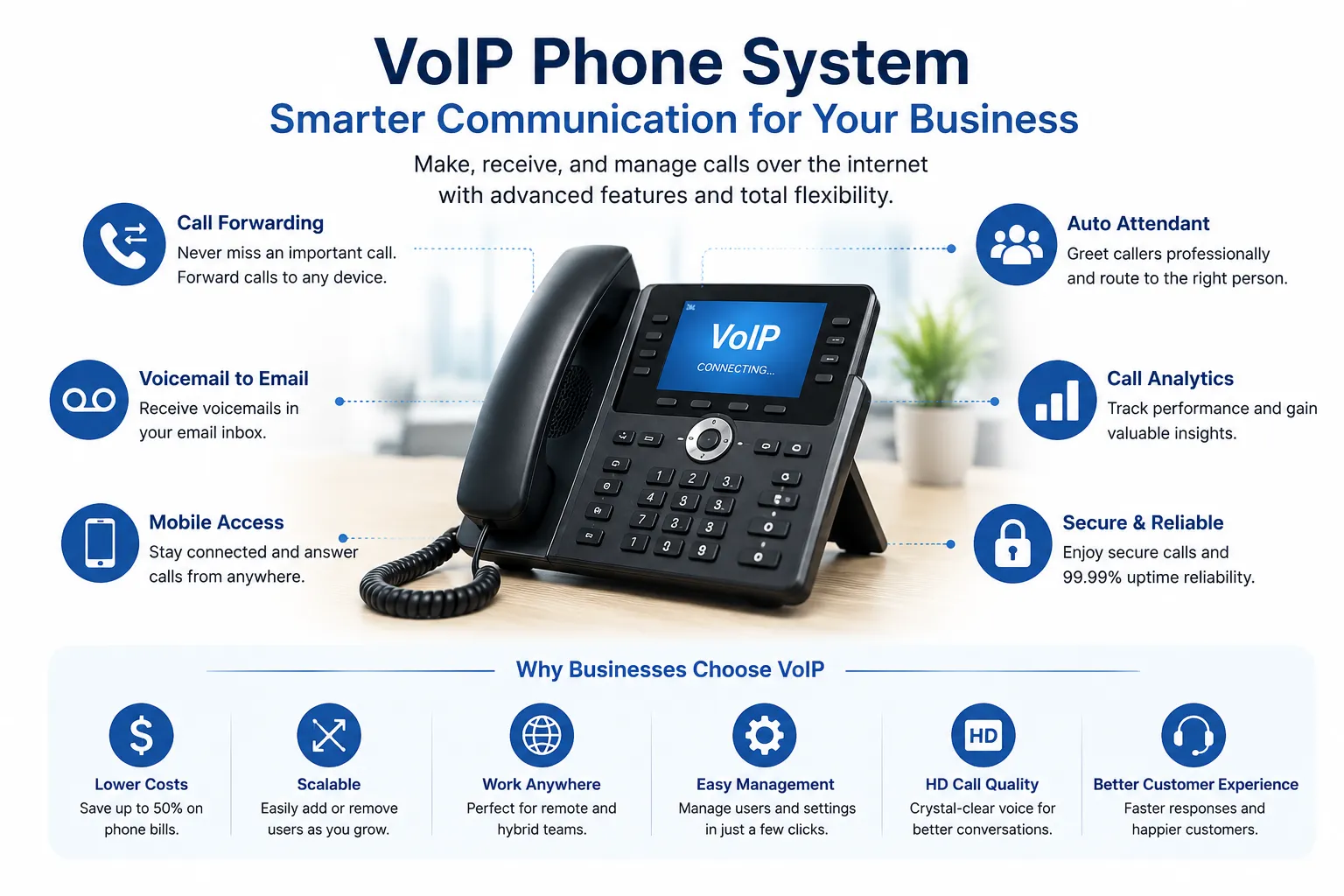
Maybe customers reach voicemail too often. Maybe employees work remotely. Maybe managers travel. Useful VoIP Phone System Features often include:
Call forwarding.
Mobile apps.
Voicemail to email.
Call recording.
Video meetings.
Auto attendants.
If employees use a feature every day, it has value. If nobody touches it, it becomes an extra expense.
Think About Your Typical Day
The phone rings. The salesperson is out meeting customers. Instead of missing the call, the call goes directly to their mobile phone. A customer leaves a voicemail. The message appears inside an email. A manager travels. The business number still works. That is where modern phone systems make a difference in VoIP Phone System for Small Business.
3. How Good Is Your Internet?
Nobody likes talking about internet speed. But it matters. A lot. Poor internet often means:
Choppy audio.
Delayed conversations.
Dropped calls.
Frustrated employees.
Before choosing a VoIP Phone System for Small Business, check the internet connection.
Because even the best phone service cannot fix poor internet.
4. Should You Choose a Cloud System?
Years ago businesses bought equipment. Large phone systems. Boxes. Cables. Maintenance contracts. Today many businesses simply log in. A Cloud Business Phone System keeps everything online.
Employees sign in.
Calls work.
Updates happen automatically.
A Cloud-Based Phone System removes much of the complexity that businesses used to deal with. For many owners, less equipment means fewer problems.
5. What Happens When Something Goes Wrong?
Because eventually something always does. A user forgets a password. A setting changes. An employee needs help. This is why support matters. Before selecting a VoIP Service Provider, ask:
How quickly do they answer?
Is support available at night?
Can someone help during setup?
Is technical assistance included?
Good support becomes important the moment a problem appears.
6. What Will You Really Pay?
The cheapest price on a website rarely tells the full story.
There may be:
Setup charges.
User fees.
Feature costs.
Equipment costs.
A reliable Business Phone Service is not always the cheapest one.
Many businesses discover that paying slightly more gives them better support and fewer problems. And sometimes that difference is worth every dollar.
7. Can Employees Work Anywhere?
This matters more than ever. Some employees work from home. Some travel. Some move between locations. A VoIP Phone System for Small Business allows employees to stay connected from almost anywhere.
The customer calls the business.
The employee answers.
The conversation happens.
The location no longer matters.
That flexibility changes the way many businesses operate.
8. Will the System Still Work Two Years From Now?
Businesses grow. Teams expand. Departments change. Locations open. The right VoIP Phone System for Small Business should grow without creating new problems. Adding a new employee should take minutes. Adding another office should not require replacing everything. Good systems grow with the business.
9. Compare Before You Decide
Every company says they are the best. That makes comparison important. A proper Business Phone System Comparison should include:
Monthly costs.
Included features.
Support quality.
Reliability.
Customer reviews.
Sometimes the second option becomes the better choice.
Sometimes the cheapest option becomes the most expensive later.
Taking a little extra time usually pays off.
10. At the End of the Day, It Is About Communication
Customers want answers. Employees need information. Managers need updates. Modern Business Communication Solutions help businesses stay connected. Better communication usually means:
Better customer service.
Faster responses.
Fewer missed opportunities.
Happier employees.
That is why businesses continue moving toward internet-based phone systems.
Before Making a Decision, Ask Yourself This
Will this system make everyday work easier?
Will employees actually use it?
Will customers notice better service?
Will the business grow with it?
If the answer is yes, the decision becomes much easier.
Conclusion:
Choosing a VoIP Phone System for Small Business is not really about technology. It is about people. It is about making sure customers can reach someone. It is about helping employees stay connected. It is about removing small problems that happen every single day.
The right phone system quietly does its job. Calls get answered. Employees stay connected. Customers receive help. And the business keeps moving forward. That is usually what every business owner wants.
Frequently Asked Questions
What is a VoIP phone system?
VoIP is basically a phone system that runs on your internet. You make and take calls through the web. Way more flexible than traditional phones.
Why are businesses moving to VoIP?
It is cheaper, more flexible, works great for remote work, and is easier to manage. That's really it. Businesses are switching 'cause it just makes sense.
Can employees answer calls from home?
Yep. They can take business calls on their phone app, laptop, or desk phone — anywhere they get the internet. That's the beauty of it.
Does internet speed affect call quality?
Yeah, it does. If your internet's slow or spotty, calls get choppy or drop. You need a solid connection to keep conversations clear.
What features matter most?
The big ones? Call forwarding, voicemail, mobile apps, video meetings, and call recording. Those are the tools people actually use every day.
Is cloud VoIP better for small businesses?
Usually, yeah. No expensive hardware to buy. Easier to set up. Easier to manage. That's huge for small businesses without an IT person on staff.
Can existing numbers be kept?
Most providers let you bring your current numbers over. So you don't have to change anything — your customers can still reach you the same way.
How long does setup usually take?
Pretty fast. Most providers can get you going in just a few days, depending on what you need.
Is VoIP secure?
Yeah, modern providers use encryption and security tools to keep your calls and data safe. So no worries there.
Can the system grow with the company?
Definitely. You can add users, add departments, add locations — it all scales right along with you.