Co-Managed IT Services in Orlando: Help Internal IT Teams Scale Without Losing Control
For growing organizations, Co-managed IT services in Orlando has become a smarter way to support internal IT teams without forcing the business into a full outsourcing model. Many companies already have capable in-house IT staff, but as the business grows, the workload expands faster than the team can realistically absorb. More users, more devices, more vendors, more cloud platforms, and more day-to-day issues create pressure that eventually affects service quality, project progress, and long-term planning.
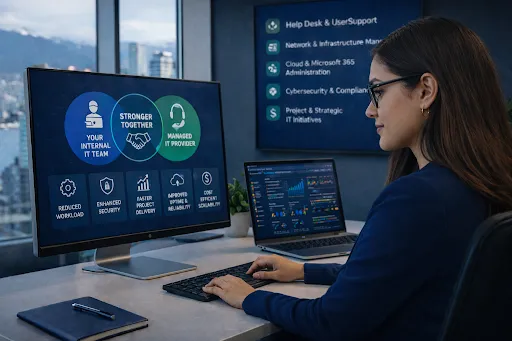
This is where co-managed IT becomes valuable. It gives internal teams the added support they need while allowing them to keep oversight of systems, priorities, and business-specific decisions. Instead of replacing the internal IT department, the model is designed to strengthen it. For businesses in Orlando, that makes co-managed IT a practical solution when technology demands are increasing but leadership still wants internal control to remain in place.
Why Internal IT Teams Get Stretched Too Thin
Most internal IT teams do not fail because they lack skill. They get stretched because the volume of responsibility keeps increasing while the size of the team often stays the same. In many businesses, a small IT department is expected to handle support tickets, device management, onboarding, offboarding, cybersecurity tasks, vendor coordination, backups, network maintenance, software administration, and infrastructure planning at the same time.
That kind of workload creates a predictable pattern. The team spends most of its time reacting to immediate issues while higher-value work gets delayed. Projects move slowly. Security reviews get postponed. Documentation falls behind. Maintenance becomes inconsistent. Instead of working proactively, the team is forced into a cycle of constant response. This is usually the moment when businesses start looking more seriously at Managed IT support Orlando and co-managed support options. The real problem is rarely capability. The problem is capacity. When a business expects a small internal team to do everything, the result is usually slower progress, more operational gaps, and rising frustration across the organization.
What Co-Managed IT Services Actually Involve
Co-managed IT is a shared-support model where the business keeps its internal IT team in place while bringing in an outside IT partner to support selected responsibilities. The exact structure can vary based on the company’s needs, but the core purpose remains the same: give the internal team more leverage, more coverage, and more support.
This support may include:
help desk overflow
endpoint management
patching and maintenance
backup monitoring
server and network support
Microsoft 365 administration
cloud support
security monitoring
after-hours coverage
project-based technical support
The benefit of this model is flexibility. Some businesses only need support with routine operational tasks. Others need stronger security support or help managing growth. In both cases, the outside provider fills gaps while the internal team stays involved in decision-making and oversight.
Why Businesses Want Extra Support Without Losing Control
A major reason businesses choose co-managed IT over full outsourcing is control. Many leadership teams value their internal IT department because those staff members understand the business, the users, the systems, and the day-to-day realities that an outside provider may not immediately know. They do not want to lose that internal knowledge or shift every responsibility externally.
At the same time, they know the current structure is under pressure.
Co-managed IT solves that problem by supporting internal control rather than removing it. A good provider does not take over blindly. It works within a defined structure, supports agreed responsibilities, and helps the business create more consistency where the internal team may be overloaded. The internal department continues to guide priorities while the outside partner helps execute, monitor, and support the environment more effectively. This balance is what makes the model appealing. Businesses get added capacity without feeling like they are handing the entire IT function to someone else.
Common Signs a Business Is Ready for Co-Managed IT
Many companies wait too long before acting. They keep assuming the internal team will catch up, but the environment keeps growing more demanding. Over time, the cost of delay becomes more visible across support quality, project speed, and operational risk.
Typical signs include:
support tickets are piling up faster than they are resolved
internal projects keep getting delayed
maintenance is inconsistent
documentation is incomplete or outdated
onboarding and offboarding are not tightly controlled
internal staff have little time for strategic work
security tasks are being handled reactively
leadership feels too dependent on a few key IT people
These are not minor efficiency problems. They show that the existing support structure is no longer keeping pace with the business. Co-managed IT becomes useful because it helps correct that imbalance before those issues create larger disruptions.
How Co-Managed IT Helps Teams Scale More Effectively
The biggest benefit of co-managed IT is not simply more hands. It is better use of internal IT time. When routine operational pressure is reduced, internal teams can focus more on the work that actually improves the business. Instead of getting trapped in repetitive support requests all day, they can spend more time on infrastructure improvements, planning, vendor strategy, process refinement, and business-specific technology needs.
That shift helps the business in several ways:
users get faster support
ongoing maintenance becomes more consistent
monitoring improves
internal projects move forward with less interruption
internal staff can prioritize higher-value work
technology decisions become less reactive
This is especially important for businesses in growth mode. Scaling does not just require more technology. It requires a support model that can absorb more operational demand without creating more friction.
Security Is Often One of the Biggest Gaps
Security is one of the clearest areas where co-managed IT can make an immediate difference. Internal IT teams may understand the environment well, but when their workload is already full, security work often becomes inconsistent. Patching slips. Reviews get delayed. User access remains broader than it should be. Backups are assumed to be working instead of actively checked.
A co-managed provider can help support:
endpoint monitoring
patch compliance
access reviews
user lifecycle control
backup verification
alert handling
documentation improvements
device standards and policy alignment
This matters because many IT security problems are not caused by a total lack of awareness. They are caused by a lack of time and consistency. Businesses often know what should be done, but the internal team does not have enough bandwidth to do it at the right level across the entire environment. For organizations building a stronger operational and security foundation, it can also be useful to review guidance from the NIST Cybersecurity Framework, which outlines a practical model for identifying, protecting, detecting, responding to, and recovering from cybersecurity risks.
Co-Managed IT Supports Growth Without Immediate Hiring Pressure
Hiring more internal IT staff is not always simple. Recruiting takes time, experienced candidates are expensive, and businesses often need support immediately rather than months later. In some cases, the company does not need a full new hire anyway. It needs coverage in specific areas, support during peak demand, or extra depth for tools and systems the internal team cannot fully prioritize.
Co-managed IT can solve this more efficiently. It gives the business access to broader technical support without requiring the cost and delay of expanding headcount first. That makes it especially useful for companies managing expansion, new locations, changing compliance expectations, or more cloud and user complexity. This does not eliminate the value of internal hiring. It simply gives leadership another way to close operational gaps while staying flexible.
The Difference Between Co-Managed and Fully Outsourced IT
The distinction matters because many businesses hear “managed IT” and assume it means giving everything away.
That is not what co-managed means.
In a fully outsourced arrangement, the outside provider typically handles most or all of the IT function. In a co-managed arrangement, the internal team remains active and central. The external partner supports defined responsibilities, extends coverage, and helps the internal department operate more effectively.
That makes co-managed IT the better fit when:
the company already has internal IT staff
leadership wants to retain oversight
the team needs reinforcement, not replacement
the business wants flexibility in support structure
growth is increasing operational demand faster than internal capacity
For many midsize and growth-focused businesses, this model is simply more realistic than choosing between “do it all internally” and “outsource everything.”
What a Strong Co-Managed Relationship Should Look Like
A useful co-managed setup should not feel vague or improvised. It should be clear, structured, and built around responsibilities that both sides understand. When that clarity is missing, the relationship creates confusion. When it is present, the model works extremely well.
A strong arrangement usually includes:
defined ownership for different responsibilities
clear escalation paths
visibility into tickets and systems
shared documentation expectations
regular communication
alignment with business priorities
ongoing review of performance and gaps
The point is not to create another layer of complexity. The point is to remove operational strain while improving accountability and consistency.
Why This Model Makes Sense for Orlando Businesses
Businesses in Orlando are dealing with the same pressures affecting growth-focused companies in many major markets. Technology is more deeply tied to operations, cybersecurity expectations are higher, support needs are faster, and internal teams are often being asked to do more without proportional increases in staffing.
That is why co-managed IT continues to gain traction. It solves a practical business problem. It helps internal teams stay effective under rising demand. It improves support coverage. It reduces risk caused by overload. It also allows leadership to strengthen IT operations without making an all-or-nothing outsourcing decision.
For organizations that value both flexibility and internal oversight, this is often the most balanced path forward. If your internal IT team is spending too much time on daily support, struggling to keep projects moving, or lacking the coverage needed to manage growth confidently, co-managed support can give you the extra capacity without taking control away from your team. Kevlar IT Solutions works with businesses in Orlando to strengthen internal IT operations with practical, flexible support that improves response times, reduces pressure on internal staff, and helps your business scale with fewer operational gaps. Contact Kevlar IT Solutions to discuss a co-managed IT strategy built around your team, your priorities, and the way your business actually operates.
FAQs
What are Co-managed IT services in Orlando?
Co-managed IT services in Orlando provide shared support between your internal IT team and an outside IT partner. Your internal team stays in control while the external provider adds capacity, support, and specialized expertise where needed.
When should a business consider co-managed IT instead of hiring more staff?
A business should consider co-managed IT when internal staff are overloaded, projects are being delayed, security and maintenance tasks are slipping, or the company needs broader support without committing immediately to new full-time hires.
Does co-managed IT work for businesses that already have a strong internal IT department?
Yes. Co-managed IT is often most useful for businesses that already have a solid internal IT team but need added coverage, stronger operational consistency, or specialized support in areas like security, cloud administration, and infrastructure maintenance.
How is co-managed IT different from standard managed IT support?
Standard managed IT support often means the provider handles most or all of the IT function. Co-managed IT means the provider works alongside your internal team and supports specific responsibilities based on the structure your business needs.