
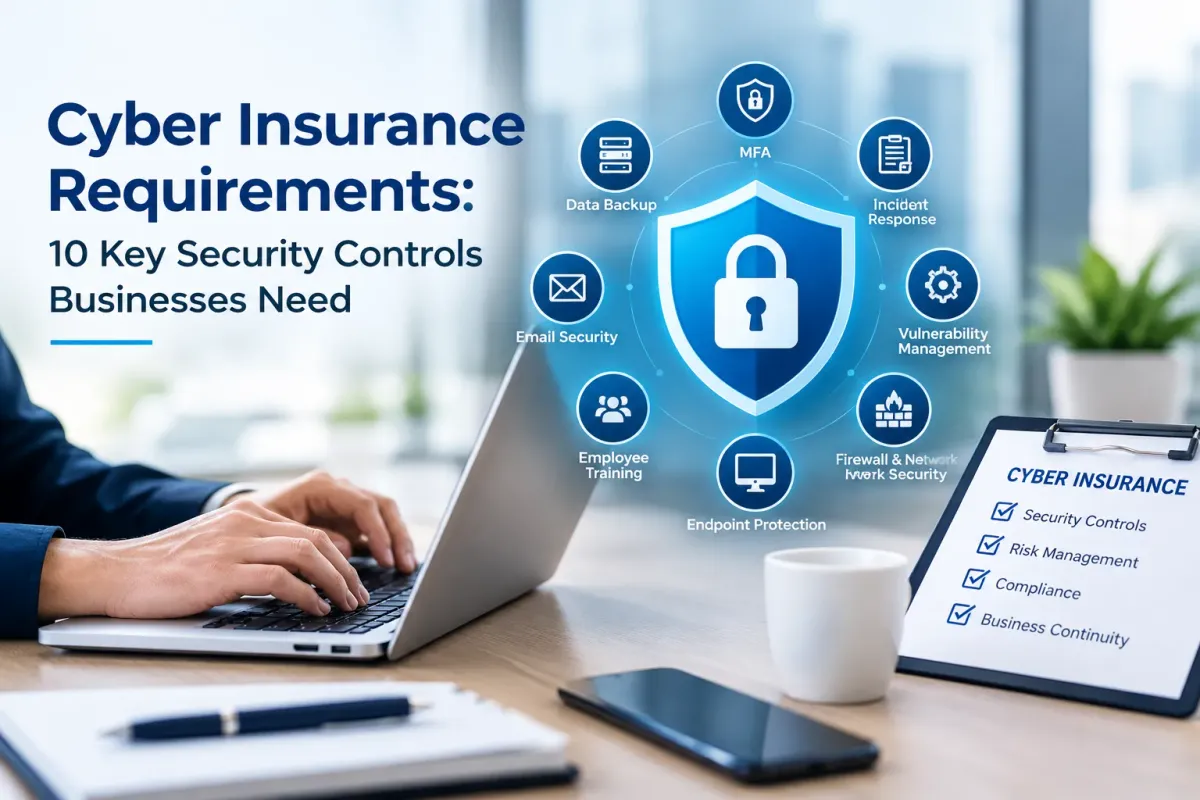
Cyber Insurance Requirements: 10 Key Security Controls
A cyberattack can expose sensitive data, disrupt operations, and create unexpected expenses. Cyber insurance can help cover certain losses, but insurers often expect businesses to maintain basic security measures.
Understanding cyber insurance requirements helps businesses prepare for coverage, reduce risks, and avoid application delays. Requirements vary by insurer, industry, and policy limits.
What Are Cyber Insurance Requirements?
Cyber insurance requirements are security controls and practices insurers may expect before approving or renewing a policy. Common cyber security insurance requirements include protecting accounts, securing data, maintaining backups, and preparing for cyber incidents.
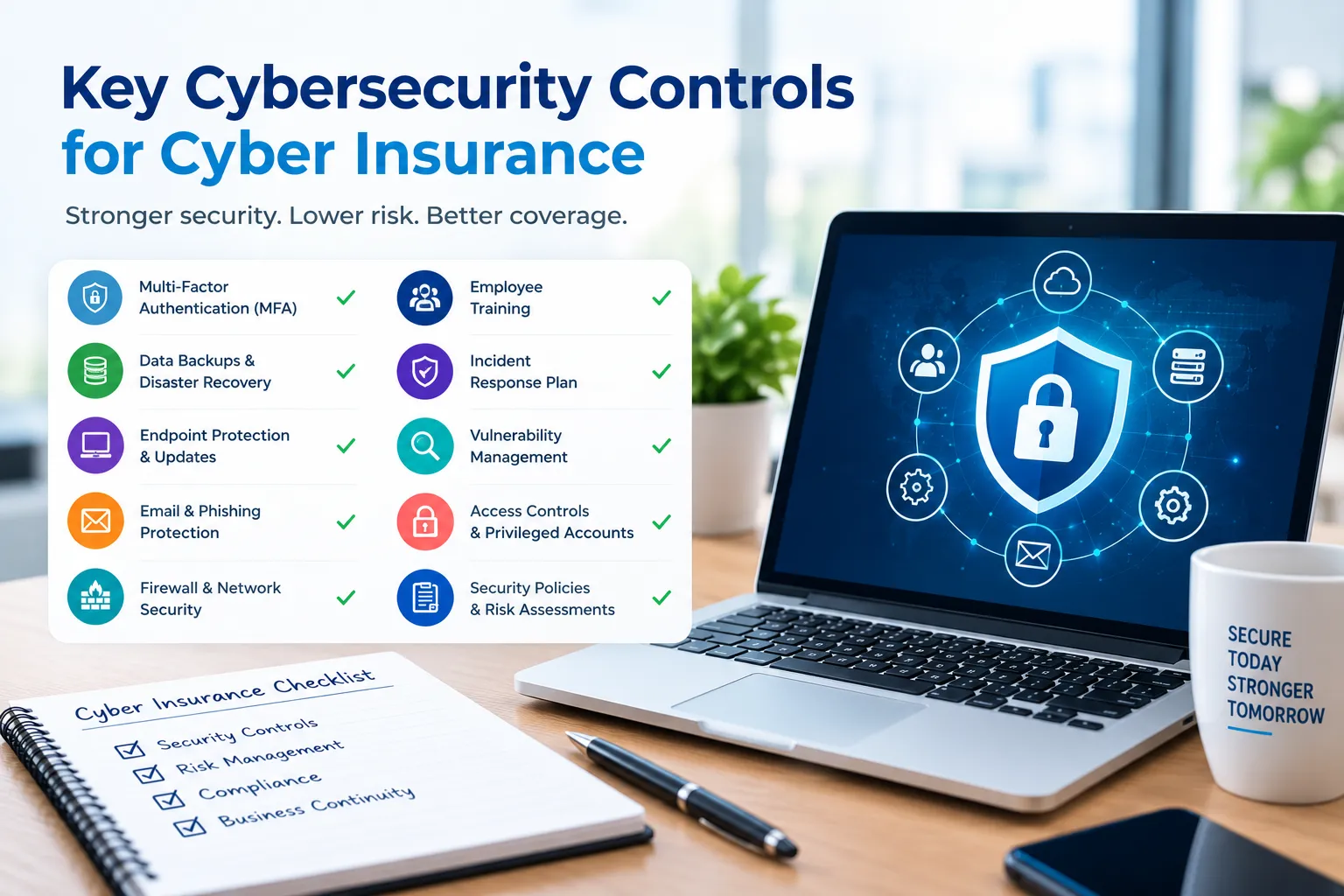
10 Cybersecurity Controls Businesses Need
1. Multi-Factor Authentication (MFA)
MFA requirements for cyber insurance often focus on email, administrator accounts, and remote access.. MFA provides an additional security layer after passwords, making it harder to access accounts.
2. Strong Passwords and Access Controls
Employ unique passwords, role-based permissions and password managers. Frequent access to the data center needs to be cut off when employees rotate or when they're no longer needed for cyber insurance compliance.
3. Regular Data Backups
Backup of critical business data regularly. Maintain separate copies of your information, away from the main network, and practice restoring to ensure you can restore your information in the event of an incident.
4. Endpoint Protection and Security Updates
Ensure computers and servers are equipped with trusted security software. Keep operating systems and applications up to date to address known vulnerabilities and enhance security.
5. Email and Phishing Protection
Use email filtering and educate staff on the identification of suspicious links and attachments as well as fraudulent payment requests. These safeguards can support cyber insurance eligibility requirements.
6. Firewall and Network Security
Set-up firewalls, secure remote connections, and limit access to important systems. Regularly check network settings to minimise unauthorised access.
7. An Incident Response Plan
Establish a procedure to report attacks, who will respond and how operations will recover. Know your insurance company's claim reporting policies.
8. Employee Cybersecurity Training
Educate employees about phishing, password security and the safe management of data. Maintain training records to ensure employees know what is required of them in the realm of Cyber Security.
9. Data Protection and Encryption
Only share confidential information when necessary and encrypt when applicable. The cybersecurity insurance requirements for businesses may depend on the type of data they collect and store.
10. Vulnerability Management
Detects outdated software, security vulnerabilities and un-patched systems. Handle serious issues in a timely manner and record that they were resolved. Some insurers also might require security assessments or penetration testing.
How to Prepare for Cyber Insurance
To meet requirements for cyber insurance, businesses should:
Examine insurer's application and needed controls.
Confirm multi-factor/authentication and back-up plans.
Keep software and security up-to-date.
Maintain employee training records.
Record incident response procedures.
Give correct details of any existing security measures.
These steps can help businesses prepare for insurer reviews, but they do not guarantee coverage or approval for every incident. Maintaining clear records and documenting security controls and risk management practices can help businesses demonstrate their security processes and prepare for relevant compliance reviews.
What Affects Cyber Insurance Coverage?
Cyber insurance coverage requirements differ according to business size, industry, data sensitivity, and requested policy limits. Insurers might also take previous incidents and current security measures into account.
Please read your policy thoroughly. Coverages, deductibles, exemptions and claim reporting dates are factors that may impact whether a claim is paid. Cyber insurance compliance obligations are not simply something you have to do when you are applying for cyber insurance, but rather during the policy period as well.
Why Cyber Insurance Requirements Matter for Growing Businesses
Meeting cyber insurance requirements helps businesses reduce the risk of data breaches, ransomware attacks, and costly downtime. Strong security practices also protect customer information, maintain trust, and help daily operations continue with fewer disruptions. Businesses can support these efforts through ongoing security monitoring and maintenance, including software updates, system monitoring, and regular security reviews.
Businesses should review their security controls regularly as technology and cyber threats change. Keeping software updated, training employees, testing backups, and documenting security procedures can make it easier to meet insurer expectations and maintain suitable coverage.
Conclusion
To fulfill cyber insurance requirements, it's essential to have good security measures, a precise application, and documentation of the situation. It's important for businesses to know what the insurer's policies say before assuming they have a policy to cover them, have necessary controls, and know what is excluded.
Frequently Asked Questions
What are the most common cyber insurance requirements?
Examples of common requirements are MFA, secure backups, endpoint protection, software updates, access control, employee training, and incident response plan.
Is MFA required for cyber insurance?
Most insurance companies require MFA for critical accounts and when logging in remotely. Review your provider's particular terms and conditions.
Do small businesses need cyber insurance?
Ransomware, data breaches and email scams are threats to small businesses. Coverage can help to control some of the financial losses.
Does cyber insurance require backups?
A few insurers will need regular backups and may ask if recovery measures are tried.
Can a business get cyber insurance without MFA?
Some insurers may restrict or decline coverage when MFA is missing from critical systems. Requirements vary.
What is cyber insurance compliance?
It is to comply with the security requirements or the policy requirements set forth by the insurer.
Are penetration tests required?
Not always. Requirements for testing may vary by insurance company, business risk, and coverage desired.
How often should security controls be reviewed?
Review controls regularly and after significant system changes or security incidents.
Does cyber insurance cover every cyberattack?
No. Coverage depends on policy wording, the exclusion and conditions of the policy.
How can a business prove compliance?
Retain MFA configurations, backup test results, security policies, training documentation and incident response documentation.