What Are Help Desk Services? Complete Business Guide
Business Help desk services are not just for big corporations. They are for any business that cannot afford downtime or frustrated employees. Once that is understood, everything starts making sense.
What Are Help Desk Services
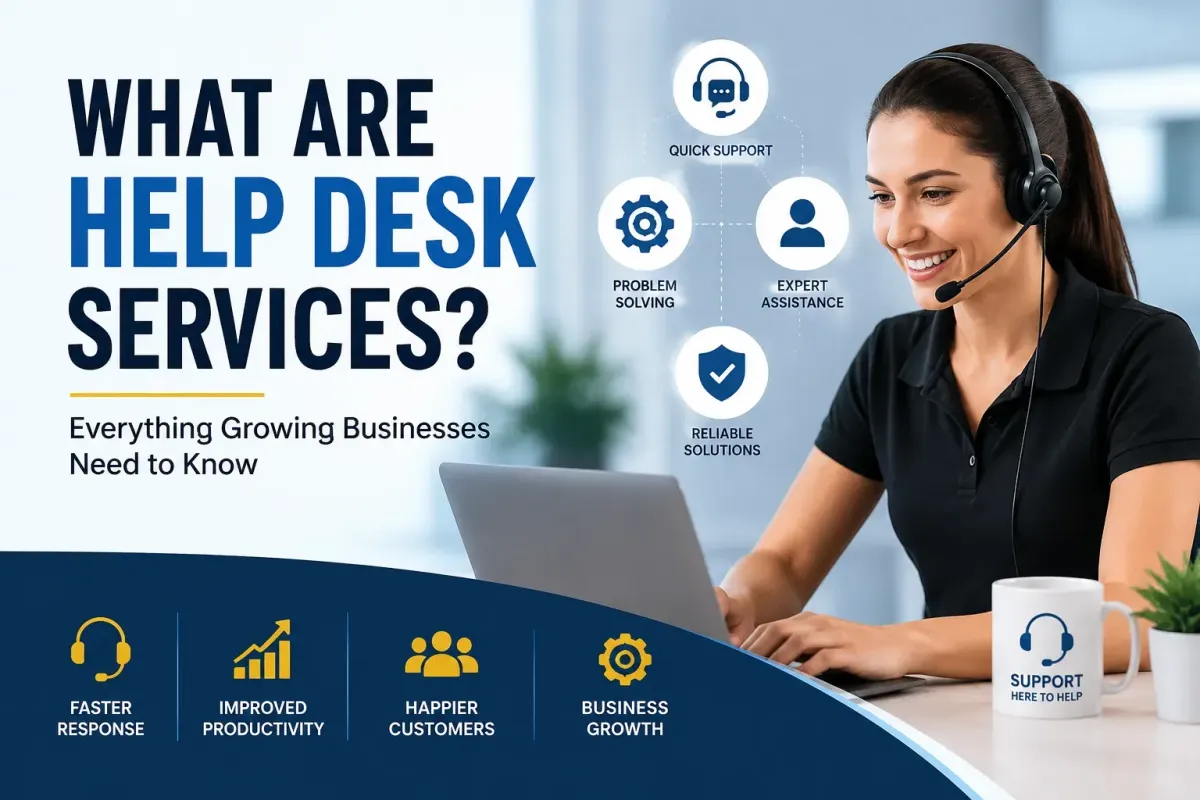
A managed help desk is a centralized service that provides business technical support and assistance to users who encounter issues with technology, software, or IT systems. Think of it as the single point of contact for all technology-related problems.
It handles troubleshooting, answering user questions, managing support tickets, and providing remote assistance. They are the frontline of IT support.
Why Growing Businesses Need Desk Services
The shared inbox approach works when it is just you and a couple of customers. But once the team grows past a few people, chaos sets in.
Here is what happens without proper desk services:
Missed tickets: No one knows who is handling what. Requests fall through the cracks.
Duplicate work: Multiple agents reply to the same message because they cannot see each other's work.
No visibility: Managers cannot see workload, response times, or agent performance.
Frustrated customers: Slow responses and inconsistent answers drive people away.
They provide structure, accountability, and the ability to scale support without sacrificing quality.
Help Desk vs. Service Desk
These terms get mixed up all the time. Here is the difference.
A help desk is tactical. It focuses on fixing what is broken. Password resets, software issues, basic troubleshooting. It solves immediate problems and keeps things running.
A service desk is strategic. It manages the full lifecycle of IT service desk. Incident management, problem management, change management, and request fulfillment all fall under the service desk.
In short, the help desk is part of the service desk. The help desk handles day-to-day support. The service desk looks at the bigger picture.
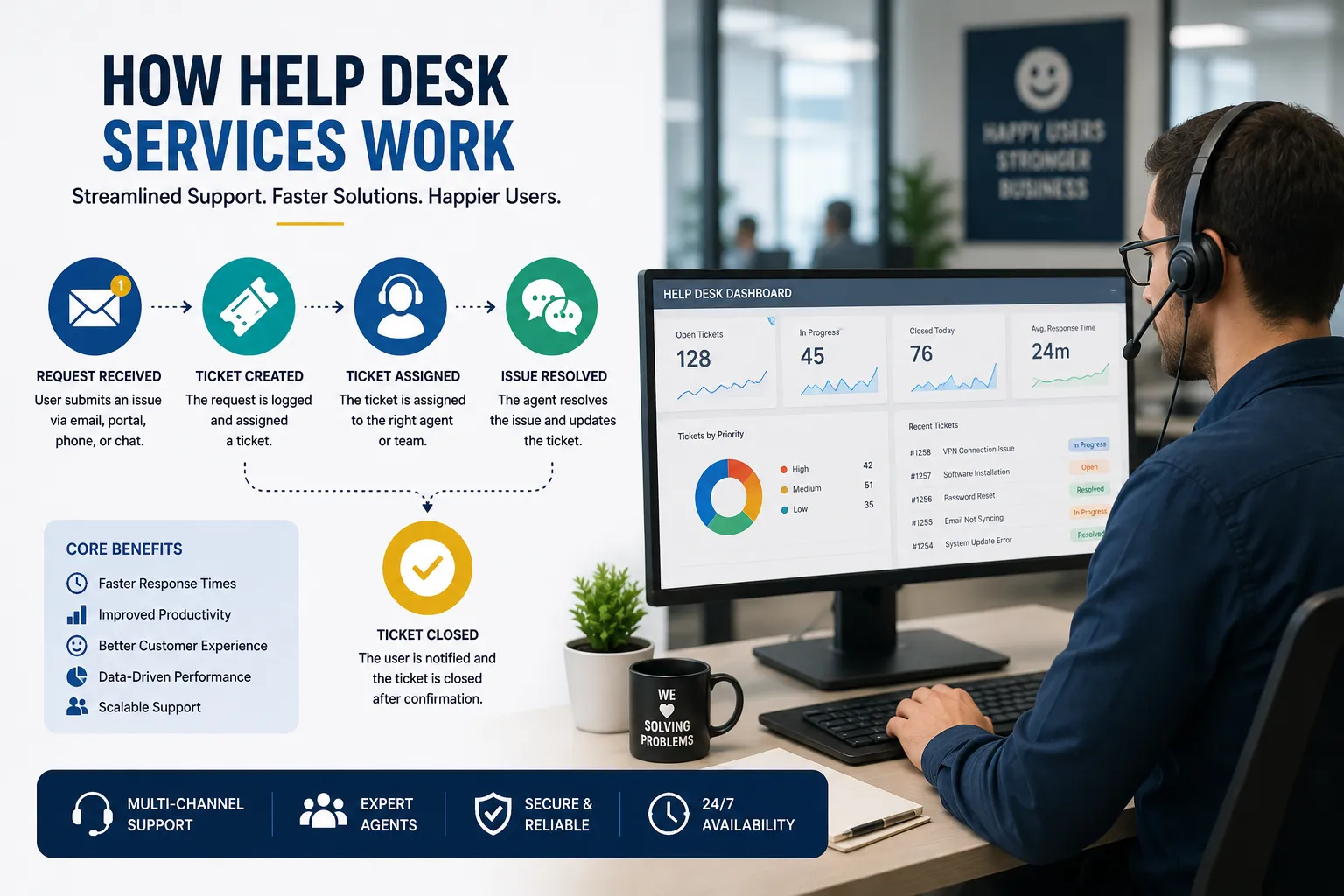
How Help Desk Services Work
It operate through a ticketing system. Every request gets logged, categorized, and tracked from start to finish.
Core Functions
Incident management: Identifying, assessing, and responding to service disruptions. The goal is to restore service as quickly as possible.
Request fulfillment: Handling user requests like password resets, software access, and new hardware. These are less urgent than incidents but still need tracking.
Knowledge management: Building a library of solutions so users can help themselves. This deflects tickets and reduces workload.
Reporting and dashboards: Tracking response times, resolution rates, and customer satisfaction. Data drives better decisions.
Outsourced vs. In-House Help Desk
Growing businesses face a choice. Build an in-house team or outsource help desk services.
Outsourced Help Desk
An outsourced help desk is provided by a managed service provider offering managed IT services at a fixed cost. The provider handles staffing, training, and day-to-day operations.
Benefits include:
Cost savings: No hiring, training, or benefits costs.
24/7 availability: Providers have staff around the clock.
Scale flexibility: Add support during busy periods without hiring.
Access to expertise: Providers have specialists for different technologies.
In-House Help Desk
An in-house team gives more control over culture, processes, and security. But it comes with higher costs and recruitment challenges.
Hybrid Model
Many growing businesses use a hybrid approach. Keep internal leadership, security, and escalation in-house. Outsource frontline support and after-hours coverage.
When It Is Time to Upgrade
Here are the signs that a growing business needs professional help desk services:
- Emails are being missed
- Multiple agents reply to the same message
- No visibility into response times
- Customers complain about delays
- The support team is growing
- Leadership asks for reporting
Any one of these signals means it is time to move beyond the shared inbox.
Conclusion
Help desk services are essential infrastructure for growing businesses. They provide structure, accountability, and the ability to scale support without sacrificing quality.
The right help desk service keeps customers happy, employees productive, and systems running smoothly by delivering reliable business technical support every day. For any business dealing with more than a handful of support requests, it is not optional. It is necessary.
Frequently Asked Questions
What's the difference between a help desk and a service desk?
A help desk fixes immediate tech problems. A service desk handles incidents, changes, and requests as part of the whole IT operation.
Should I outsource my help desk or keep it in-house?
Depends on what you need. Outsourcing saves money, gives you 24/7 support, and lets you scale up or down. In-house gives you more control. A lot of growing businesses go hybrid — best of both worlds.
What does help desk software actually do?
It pulls all your support requests into one ticketing system. Plus it handles automation, reporting, and knowledge management.
How do help desk services improve customer satisfaction?
They cut down response times. Make sure nothing slips through the cracks. And deliver consistent service across phone, email, chat — whatever. Faster fixes and clear communication keep customers happy.
What is a ticketing system in a help desk?
A ticketing system is the core tool that logs every support request. Each ticket has a status, owner, priority, and full history. It ensures nothing falls through the cracks.
Can help desk software integrate with other business tools?
Yes. Most modern help desk platforms integrate with CRM, accounting, project management, and communication tools. This gives agents full context when handling requests.
What is the difference between technical support and help desk services?
Technical support handles deeper issues that require specialized expertise. Help desk services handle frontline issues like password resets, software questions, and basic troubleshooting.
How does automation help in help desk services?
Automation routes tickets to the right agents, sends status updates, triggers SLA escalations, and suggests responses. It frees agents to focus on complex issues.
What are SLAs in help desk services?
Service Level Agreements define expected response and resolution times. They create accountability and ensure customers receive service within a reasonable timeframe.
When should a small business invest in help desk services?
When more than one person handles support requests, when emails get missed, when customers complain about slow responses, or when leadership needs visibility into support performance.