Why Co-Managed IT Services Are Growing: Better Coverage, Stronger Security, Less Pressure
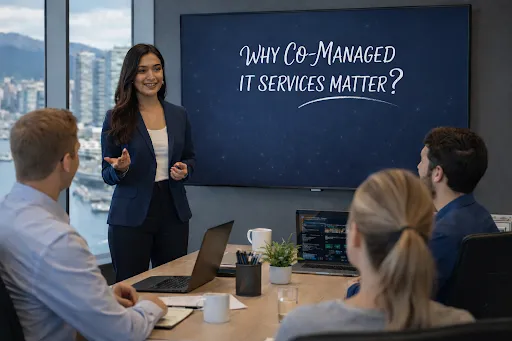
The pressure on internal IT has changed. Businesses are moving faster, systems are more connected, and users expect immediate support whether they are in the office, remote, or working across multiple platforms. In that environment, Co-managed IT services in Orlando is becoming a more practical option for companies that want to strengthen internal IT without handing everything to an outside provider. It is not just a staffing fix. It is a way to build a more resilient support model when business demands keep rising but internal resources do not expand at the same pace.
Many organizations do not start exploring co-managed IT because something has failed completely. They do it because they can see the strain building. Projects are moving slower than expected. Routine support is eating up the day. Security tasks are getting squeezed between urgent tickets. Documentation is incomplete. Leadership wants more consistency, but the internal team is already overloaded. Co-managed IT becomes attractive because it helps solve those issues without disrupting the role of the internal team.
The Real Reason This Model Is Growing
A lot of businesses still think of IT support in two categories only. Either the company handles everything internally, or it outsources everything to a managed service provider. That is too simplistic. The reality is that many businesses sit in the middle. They already have internal IT people who understand the company, the users, and the systems. What they do not have is enough bandwidth to keep support, maintenance, security, and growth initiatives moving at the right pace all at once.
That middle ground is exactly where co-managed IT fits. Instead of asking whether the internal team should stay or go, the better question is whether the current support structure matches the complexity of the business. In many cases, it does not. The team is capable, but the volume of responsibility has outgrown the support model around it.
Internal IT Is Now Being Asked to Do Too Much
One of the biggest reasons co-managed support is growing is simple: internal IT teams are carrying more than they should.
A small or midsize internal department may be responsible for:
user support
device provisioning
identity and access administration
patching
server oversight
network issues
cloud platform management
vendor coordination
backup reviews
cybersecurity response
long-term project planning
That workload would be challenging even if the environment stayed stable. But most environments do not stay stable. Businesses add new users, new devices, new software, new locations, and new security expectations. What used to be manageable becomes fragmented. The team starts operating in constant response mode. When that happens, the business feels it in different ways. Support slows down. Strategic work gets delayed. Risk increases quietly in the background.
Co-Managed IT Is About Capacity and Coverage
The strongest reason to consider co-managed support is not because internal IT lacks skill. It is because the business needs more coverage than the internal team can reasonably provide on its own.
Coverage matters in several areas:
daytime support volume
after-hours response
vacation and absence coverage
project assistance
specialized technical depth
security monitoring
maintenance consistency
Without enough coverage, businesses become overly dependent on a small number of internal people. That creates fragility. If one person is unavailable, overloaded, or pulled into a major issue, other priorities stop moving. Co-managed IT reduces that fragility by adding a support layer around the internal team. The business keeps its internal knowledge and decision-making while reducing the operational pressure that keeps causing delays.
Better Security Is a Major Driver
Security is one of the clearest reasons this model is growing. Businesses know that cybersecurity risk is no longer something handled once a year through a policy review or a software purchase. It is ongoing. It requires consistency. The problem is that consistency is hard to maintain when internal teams are overloaded.
Tasks that often get squeezed include:
routine access reviews
endpoint policy enforcement
patch compliance
backup verification
alert review
device lifecycle standards
user offboarding controls
documentation updates
This is where co-managed support becomes more than an operational convenience. It becomes a practical way to reduce risk. A co-managed partner can help internal teams maintain stronger discipline around these areas without forcing them to sacrifice all of their time on repetitive administrative and monitoring work. For businesses that want a more structured risk-management reference point, NIST says its Cybersecurity Framework 2.0 can be used by organizations of any size, sector, or maturity to understand, assess, prioritize, and communicate cybersecurity efforts. In other words, stronger security often depends less on adding more tools and more on making sure the right work actually gets done consistently.
Co-Managed Support Helps Internal Teams Work at the Right Level
One of the biggest misconceptions about co-managed IT is that it somehow weakens internal IT. In a good setup, the opposite is true. It helps the internal team operate at a higher level. When repetitive support issues, maintenance tasks, and overflow requests are better distributed, internal staff can spend more time on:
business-specific systems
process improvements
infrastructure planning
vendor strategy
application rollouts
long-term technology alignment
That shift matters because internal teams usually create the most value when they are focused on the business, not buried under ticket queues.
Co-managed support allows the business to protect that higher-value time while still keeping the operational side of IT running properly.
Why Businesses Prefer This Over Immediate Hiring
Hiring more internal IT staff sounds like the obvious answer, but it is not always the best first move. Hiring takes time. Salaries and benefits are fixed costs. The company may not need a full additional employee in every area. Sometimes the business needs:
overflow help
project help
better monitoring
stronger security oversight
access to broader technical depth
support during a period of growth
That is where co-managed IT becomes efficient. It gives the business access to added capability without requiring immediate full-time expansion in headcount. This is especially useful for organizations going through transitions such as:
office growth
cloud migrations
compliance changes
increased remote work
rising support demand
infrastructure modernization
In these situations, flexibility matters more than rigid staffing models.
The Control Question Matters More Than People Admit
A lot of companies hesitate because they worry about control. They assume outside support will override their internal team, change processes without context, or create confusion around ownership. That concern is valid only when the structure is weak. A proper co-managed relationship should make ownership clearer, not blurrier. The internal team should know what it owns. The provider should know what it supports. Escalation paths should be defined. Reporting should be visible. Documentation should be shared. The model should feel collaborative, not political. This is why the provider matters. A weak provider creates friction. A good one strengthens the operating model around the internal team.
Co-Managed IT Works Best When It Is Specific
One reason some co-managed relationships fail is because they are too vague. Businesses say they want “extra support,” but they never define where the extra support is actually needed. A stronger approach identifies the real pressure points first.
That may include:
help desk overflow
patching and endpoint management
Microsoft 365 administration
backup oversight
network monitoring
project execution
security alert handling
after-hours support
Once the gaps are clear, the co-managed model becomes much easier to structure and much easier to measure. This also makes it easier for leadership to understand the business value. Instead of paying for a broad concept, the company is solving clearly defined operational problems.
Why This Trend Is Likely to Continue
The forces pushing businesses toward co-managed IT are not temporary. Technology environments are not getting simpler. User expectations are not dropping. Security demands are not slowing down. Internal teams are not suddenly going to have abundant unused capacity.
That means businesses will keep looking for models that allow them to:
improve IT coverage
reduce overload
strengthen security
stay flexible
retain internal control
Co-managed IT answers that need better than the old “all internal” versus “all outsourced” choice. That is why it keeps growing. It reflects how businesses actually operate now. If your internal IT team is carrying too much operational weight, missing time for strategic work, or struggling to keep support and security aligned as the business grows, Kevlar IT Solutions can help you build a co-managed model that adds real capacity without reducing internal control. We work with businesses in Orlando to improve coverage, reduce pressure on internal staff, and support more consistent IT operations through a practical structure built around your team’s actual needs. Contact Kevlar IT Solutions to discuss a co-managed IT approach that supports growth without creating more internal complexity.
FAQs
Why are Co-managed IT services in Orlando becoming more popular?
They are becoming more popular because many businesses already have internal IT staff but need more coverage, better operational consistency, and stronger support without moving to a fully outsourced model.
What problems does co-managed IT solve for internal teams?
Co-managed IT helps reduce ticket overload, improve support coverage, strengthen maintenance and security routines, and give internal teams more time to focus on strategic work instead of constant reactive tasks.
Is co-managed IT only useful for large companies?
No. It can be especially useful for small and midsize businesses that have some internal IT capability but need additional support to manage growth, user demand, security expectations, or infrastructure complexity.
How do you know if co-managed IT is structured properly?
A strong co-managed setup has clear ownership, defined escalation paths, shared visibility, documented responsibilities, and support aligned to real operational gaps rather than vague promises.