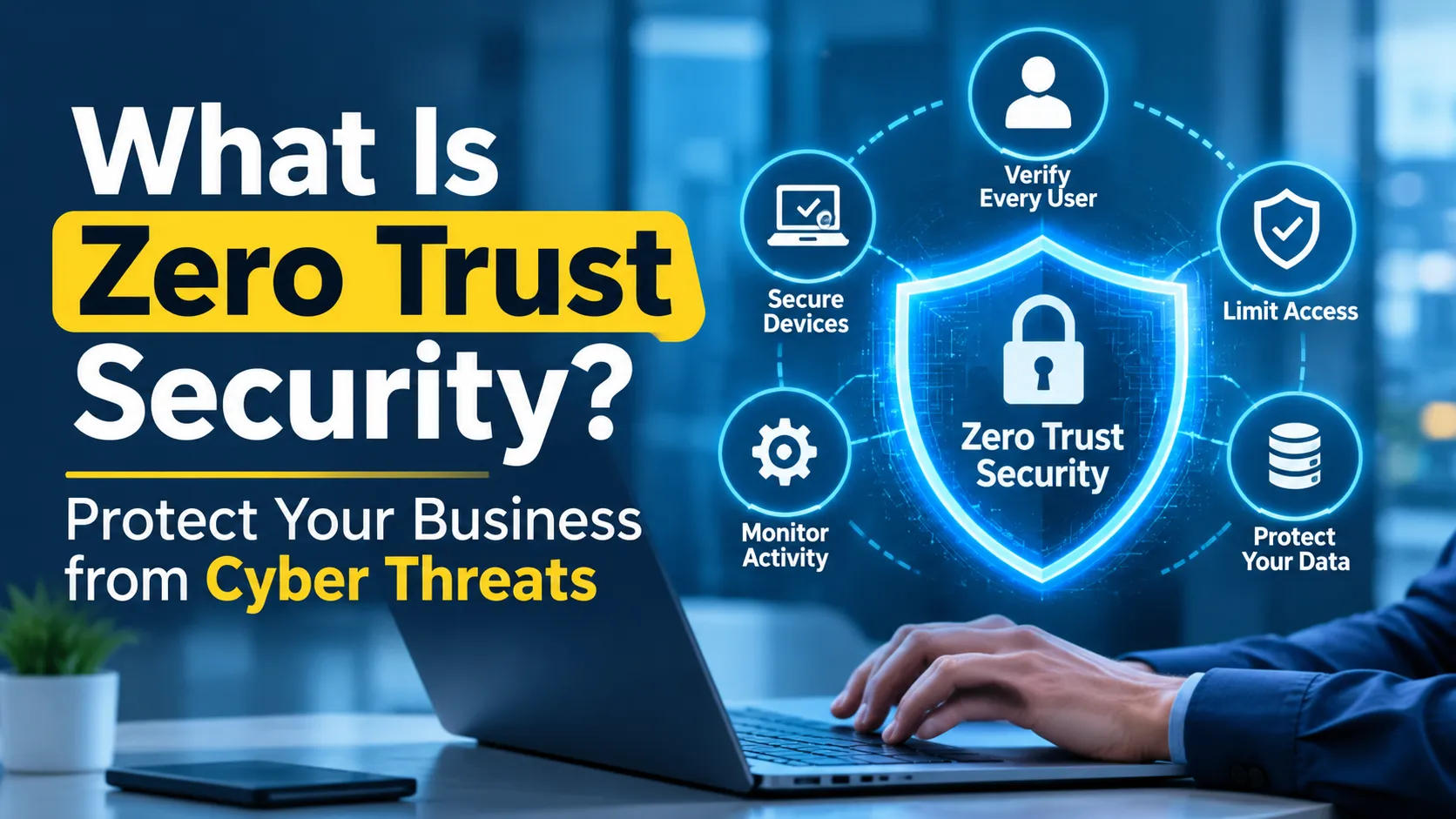
What Is Zero Trust Security? How It Protects Business from Cyber Threats
Cyber threats are becoming more advanced, and businesses can no longer rely on passwords or network firewalls alone to protect their information. Employees work remotely, use different devices, and access company systems from multiple locations. This creates more opportunities for attackers to gain access.
The zero trust security model offers a different approach. Instead of automatically trusting users or devices inside a network, it requires every access request to be verified. This helps businesses protect sensitive information and reduce security risks.
What Is the Zero Trust Security Model?
The zero trust security model is a cybersecurity approach based on one simple principle: never trust automatically, always verify.
Traditional security often assumes that users inside a company network are safe. Zero trust security removes that assumption. Every user, device, and application must prove it has permission to access specific resources.
This approach helps businesses limit unauthorized access, even when an account or device has been compromised.
How Does Zero Trust Security Work?
You may wonder, how does zero trust security work in everyday business operations?
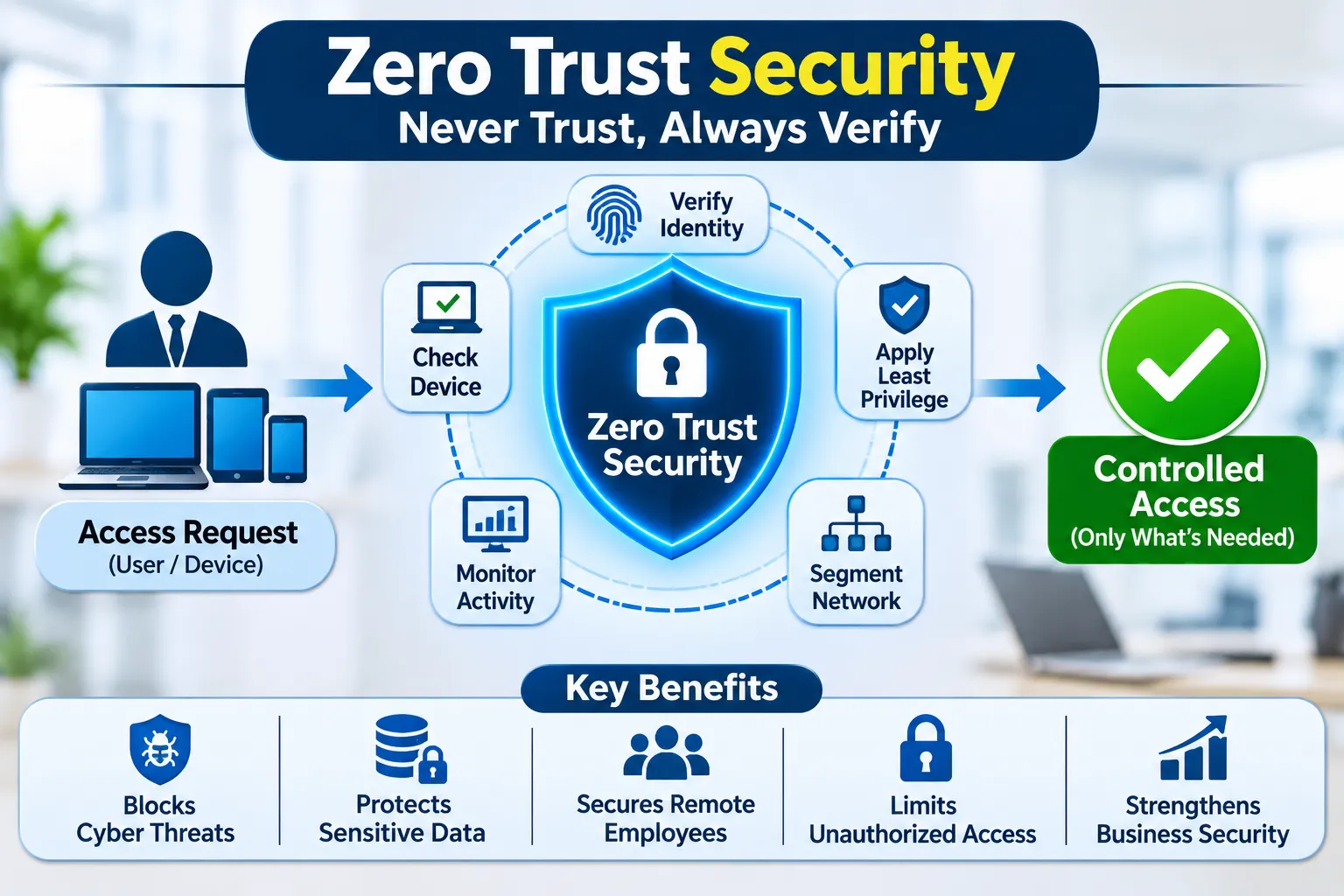
It uses several security checks before allowing access to company systems.
Common steps include:
Identity verification: Confirming who is requesting access.
Device checks: Making sure the device meets security requirements.
Access permissions: Giving users access only to the information they need.
Continuous monitoring: Watching for unusual activity or suspicious behavior.
Additional verification: Requesting another authentication step when necessary.
For example, an employee logging in from a new device may need to complete multi-factor authentication before accessing company files.
What Is Zero Trust Architecture?
Zero trust architecture is the technical framework used to put the zero trust approach into practice.
It connects identity management, device security, access controls, monitoring, and security policies.
A typical zero trust architecture includes:
Identity and access management
Multi-factor authentication
Device security checks
Network segmentation
Least privilege access
Activity monitoring
Together, these controls help prevent attackers from moving freely through business systems.
Benefits of Zero Trust Security for Businesses
Implementing zero trust can improve how businesses manage access and respond to cyber threats.
1. Reduces Unauthorized Access
Every access request is verified instead of automatically trusted. This makes it harder for unauthorized users to reach sensitive company information.
2. Protects Remote Employees
Employees often access business applications from home, offices, and public networks. Zero trust security helps apply consistent access rules regardless of location.
3. Limits the Impact of Cyberattacks
If an attacker compromises one account, restricted permissions can prevent them from accessing every system. This helps reduce the potential damage.
4. Improves Data Protection
Businesses can control who accesses financial records, customer information, internal documents, and other sensitive data.
5. Supports Better Security Monitoring
Continuous monitoring helps identify unusual login attempts, suspicious devices, and unexpected access patterns.
Zero Trust Security Best Practices
A successful zero trust strategy requires more than installing one security tool. Businesses need consistent policies and ongoing monitoring.
Important zero trust security best practices include:
Use multi-factor authentication (MFA): Require additional verification beyond passwords.
Apply least privilege access: Give employees only the permissions required for their responsibilities.
Verify every device: Check device security before granting access.
Segment networks: Separate systems to limit unauthorized movement.
Monitor user activity: Look for unusual behavior and access requests.
Review permissions regularly: Remove outdated accounts and unnecessary access.
Keep systems updated: Apply security patches to reduce vulnerabilities.
These practices help create stronger protection across business operations.
Conclusion:
The zero trust security model helps businesses move beyond traditional network protection by verifying every access request and limiting unnecessary permissions. With strong identity checks, MFA, least privilege access, and continuous monitoring, businesses can reduce security risks and protect important information.
Frequently Asked Questions
What is the main purpose of zero trust security?
Its main purpose is to prevent unauthorized access by verifying every user, device, and access request.
Is zero trust security suitable for small businesses?
Yes. Small businesses can start with practical measures such as MFA, access restrictions, and regular account reviews.
What are the three main principles of zero trust?
The core ideas are continuous verification, least privilege access, and assuming that a breach may occur.
Does zero trust replace firewalls?
No. Firewalls remain useful, but zero trust adds identity-based access controls, device checks, and continuous monitoring.
Why is multi-factor authentication important in zero trust?
MFA adds another layer of verification, making stolen passwords less useful to attackers.
What is least privilege access?
It means giving users only the permissions they need to complete their work, rather than unrestricted access.
How long does zero trust implementation take?
It depends on the size of the organization, existing systems, security requirements, and implementation plan. Many businesses introduce it gradually.
Does zero trust protect remote workers?
Yes. It helps verify users and devices regardless of whether they connect from an office, home, or another location.
What is the difference between zero trust and traditional security?
Traditional security often trusts users inside a network. Zero trust verifies access requests instead of assuming they are safe.
Is zero trust a product or a security strategy?
Zero trust is a security strategy and architecture. Businesses use different technologies and tools to implement it.